

Ибо в вас должны быть те же чувствования, какие и во Христе Иисусе:
Он, будучи образом Божиим, не почитал хищением быть равным Богу;
но уничижил Себя Самого, приняв образ раба, сделавшись подобным человекам и по виду став
как человек;
смирил Себя, быв послушным даже до смерти, и смерти крестной.
Посему и Бог превознёс Его и дал Ему имя выше всякого имени,
дабы пред именем Иисуса преклонилось всякое колено небесных, земных и преисподних,
и всякий язык исповедал, что Господь Иисус Христос в славу Бога Отца.
Послание св. ап. Павла к Филиппийцам, глава 2, стихи 5-11.
ПОСЛЕСЛОВИЕ К ПРАЗДНОВАНИЮ ПАЛЬМОВОГО ВОСКРЕСЕНЬЯ
В сегодняшнем церковном расписании помимо Евангелия есть еще и отрывок из Послания к
Филиппийцам, как дополнение к нашему празднику. И что в нем?
Если излагать его лапидарно, то там инструкция-пожелание как нам следует прожить свою жизнь на Земле.
Апостол Павел начинает, приводя нам в пример самого Иисуса Христа, что Он, «будучи образом
Божиим» и «равным Богу», тем не менее, «уничижил Себя» и приняв послушание оставаться таким,
служа людям до самой своей земной смерти.
А далее, по Павлу, «Бог превознёс Его и дал Ему имя выше всякого имени».
Почему мы читаем об этом в канун Пасхи?
Да, потому, что это кульминация всего! Всего того, чему суждено быть. Бог приходит на Землю на
Рождество. Смирив свое божественное естество, служит людям. И, наконец, погибает, чтобы через
смерть и воскресение прийти к жизни и вечной небесной славе.
Вот также апостол советует жить и нам. Однажды родиться. Прожить свою жизнь на Земле достойно, по-христиански, сопереживая и заботясь о других людях.
И в конце умереть, получив бессмертие и встречу с Богом на небесах.
Всё в этой апостольской схеме жизни кажется простым, понятным. Но почему мы ей не следуем?
Ответ в одно слово – гордыня.
Нам мешает гордыня. Нам хочется быть круче других. Быть царями, президентами, епископами, ну
или, на худой конец, владельцами больших и средних бизнесов.
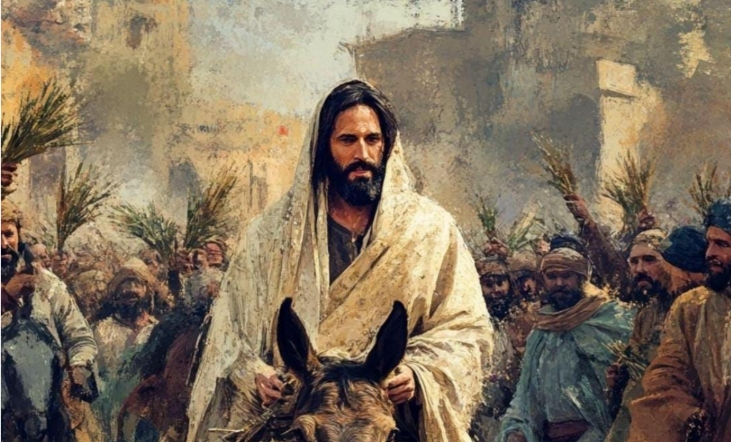
А что Бог? А Он на ослике. И пешком. Через толчею уличной иерусалимской суеты, с остановкой на
суде у Пилата. Через бичевание и оплевывание к голгофскому кресту.
И где у Него гордыня? Ее нет. А у нас? А у нас вагон. Поэтому и не получается жить по-христиански,
как Он.
Суетимся. Завидуем. Мечтаем о земной славе, званиях и наградах. Или говоря проще, больны
гордыней.
А настоящая награда она на небесах, в вечности. Аминь.
P.S. Вот только, дай Боже, нам смирить свою гордыню.
Брат всем вам и раб Богу, Александр Франц
Архиепископ Евангелическо-Лютеранской
Церкви Аугсбургского Исповедания
Here is the English translation of the «Afterword for the Celebration of Palm Sunday» as provided.
From the Chancellery of the ELC AС
Mar 30, 2026
«Have this mind among yourselves, which is yours in Christ Jesus, who, though he was in the form of God, did not count equality with God a thing to be grasped, but emptied himself, by taking the form of a servant, being born in the likeness of men. And being found in human form, he humbled himself by becoming obedient to the point of death, even death on a cross. Therefore God has highly exalted him and bestowed on him the name that is above every name, so that at the name of Jesus every knee should bow, in heaven and on earth and under the earth, and every tongue confess that Jesus Christ is Lord, to the glory of God the Father.»
— Philippians 2:5–11
AFTERWORD FOR THE CELEBRATION OF PALM SUNDAY
In today’s church lectionary, besides the Gospel, there is also this passage from the Epistle to the Philippians as an addition to our celebration. What does it contain?
To put it succinctly, it contains an instruction and a wish for how we should live our lives on earth.
The Apostle Paul begins by holding up Jesus Christ Himself as our example: He, «being in the form of God» and «equal with God,» nevertheless «emptied Himself» and accepted the obedience to remain such, serving people until His very earthly death.
Then, according to Paul, «God has highly exalted Him and bestowed on Him the name that is above every name.»
Why do we read this on the eve of Easter?
Yes, because this is the culmination of everything! Of everything that was destined to be. God comes to earth at Christmas. He humbles His divine nature and serves people. And finally, He perishes, so that through death and resurrection He might come to life and eternal heavenly glory.
The apostle advises us to live the same way. To be born once. To live our life on earth worthily, in a Christian manner, empathizing with and caring for other people.
And in the end, to die, receiving immortality and a meeting with God in heaven.
Everything in this apostolic pattern of life seems simple and clear. But why do we not follow it? The answer is in one word: pride.
Pride hinders us. We want to be better than others. We want to be kings, presidents, bishops, or at the very least, owners of large and medium-sized businesses.
And what about God? He rides on a donkey. And walks. Through the hustle and bustle of Jerusalem’s streets, with a stop at Pilate’s judgment seat. Through scourging and spitting to the cross of Golgotha.
Where is His pride? It is not there. And ours? We have a wagon-load of it. That is why we cannot live as Christians, the way He did.
We fuss. We envy. We dream of earthly glory, titles, and rewards. Or, to put it simply, we are sick with pride.
But the true reward is in heaven, in eternity. Amen.
P.S. — God grant that we may humble our pride.
A brother to you all and a servant of God,
Alexander Franz
Archbishop of the Evangelical Lutheran Church of the Augsburg Confession